On October 28, 1998, US President Bill Clinton signed the DMCA (Digital Millennium Copyright Act), which implements two World Intellectual Property Organization treaties (WIPO) from 1996.
It criminalizes the creation and distribution of technology, devices, or services designed to circumvent measures that restrict access to copyrighted works.
In the coming years, around 200 countries signed the WIPO treaty and implemented DMCA.
Don’t worry; some major countries have been spared. You can host DMCA-violated content in these DMCA-ignored countries. I’ve compiled a list and also check best 7 DMCA ignored VPS hosting

Table of Contents
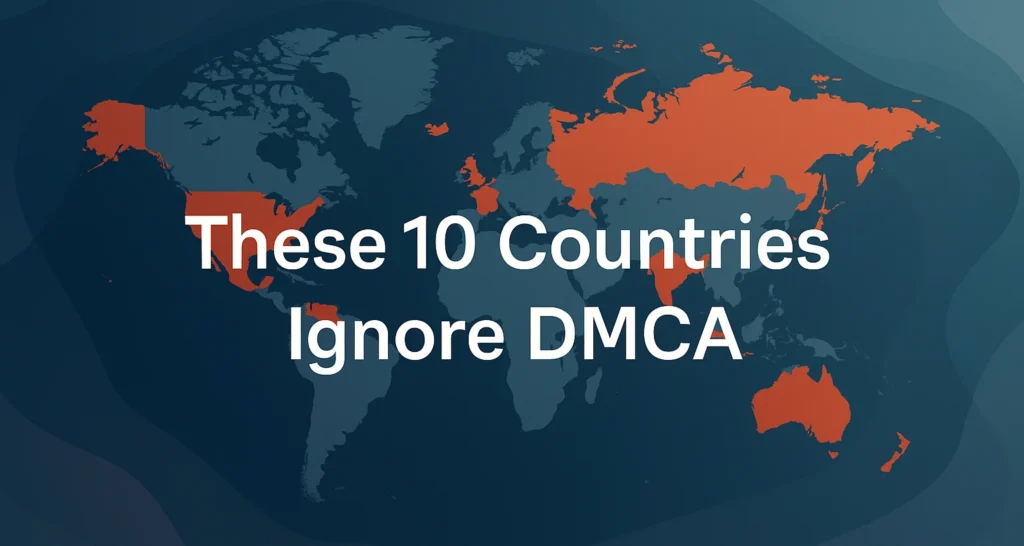
Not all countries bow to the DMCA. While most of the world complies with U.S.-led copyright enforcement, some nations offer a safe haven for content that might trigger takedown notices elsewhere.
These countries either reject U.S. jurisdiction, prioritize data privacy, or have their own lax copyright laws. Hosting DMCA-violated content in these regions is possible—but not without risks like political censorship, corruption, or local legal boundaries.
Top DMCA-Ignored Countries:
- Russia – Ignores U.S. law, but beware of censorship and Roskomnadzor.
- Netherlands – Pro-privacy, anti-DMCA; just don’t mess with Dutch content.
- Bulgaria – Anti-DMCA by nature, but corruption is a lurking threat.
- Singapore – Friendly to offshore hosting; local copyright law still applies.
- Malaysia – Accepts crypto, prioritizes anonymity, and ignores DMCA.
- Hong Kong – Jurisdictionally independent; allows anonymous hosting.
- Luxembourg – Supports freedom of expression; legal costs deter copyright cases.
- Iceland – Strong privacy and lenient IP laws; a go-to for offshore servers.
- Switzerland – Ironclad privacy laws and no tolerance for U.S. interference.
- Romania – Free speech protected; good offshore reputation with EU-level privacy.
Quick Tips:
- Use country-specific domains (.ru, .ch, .my) to dodge U.S. influence.
- Always review local copyright laws—even DMCA-ignored countries have limits.
- Pick hosts that accept crypto and state their DMCA stance clearly.
These havens aren’t completely risk-free, but with the right approach, you can host content with a greater level of privacy and legal insulation.
Can We Safely Host Copyrighted Materials in an Offshore Location?
In a nutshell, yes. However, there are a few things you should keep in mind:
- Each offshore country has its own copyright law, which you should be familiar with.
- Almost all well-known domain zones (e.g.,.com,.org,.net,.info) are owned by companies registered in the United States and must therefore comply with this Act. As a result, if a foreign Internet resource is registered in such a domain zone, it falls under the purview of the DMCA and is required to follow its rules.
- It should also be noted that search engines with the same domain name but registered in different domain zones, such as Yandex.com and Yandex.ru, have different attitudes toward the United States’ Digital Millennium Copyright Act: the first obeys the DMCA, while the second operates within the Russian regulatory framework.
- Some hosts may comply with the DMCA in an offshore location and remove your infringed content. Before hiring them, review their terms of service and speak with their sales team.
1. Russia
Russia is a safe haven for anti-DMCA content. They have a long history of great rivalry with the United States, as you are aware.
They will never tolerate US law within their borders. In order to host copyrighted material on your site, you can expect a safer location to avoid DMCA notices.
Hence, hackers enjoy deploying their applications in the world’s largest country.
However, you should exercise caution with your inconvenient political websites. It can vanish in an instant.
All published content is actively monitored by their Federal Service for Supervision of Communications, Information Technology, and Mass Media.
They have the authority to restrict your web property if they discover radical political views and piracy of Russian intellectual property.
2. The Kingdom of the Netherlands
You can understand how seriously the Dutch government takes their citizens’ privacy and freedom of expression by knowing that they were the first nation to adopt the CDSM (Copyright in the Digital Single Market) and even don’t allow any intrusion from the US National Security Agency inside the border line.
They support political websites and disregard the DMCA. However, you must not infringe on any Dutch-owned content. Otherwise, the Dutch Copyright Law (Auteursrecht) will apply.
3. Bulgaria
Bulgaria had previously been a part of the Soviet Union. So, as in Russia, ignoring the DMCA is in their blood.
You can host DMCA-violated content. They openly oppose the DMCA.
The Balkan nation, like Russia, does not tolerate unconventional political content, and the country ranks near the bottom of the EU’s global corruption rankings. It could be harmful to you.
Any local host can notify the government about your infringement in the hopes of receiving a bribe.
So those are the two risks to be aware of while deploying in the country.
4. Singapore
Singapore is the web hosting capital of the world. The main reason is the Singaporean government’s welcoming attitude toward business.
They are well-known for developing friendly rules to help businesses grow efficiently. It is the world’s second most popular country in terms of ease of doing business.
So, the island country is quite tolerant of DMCA notices. The number of offshore hosts on the island has increased dramatically.
If you decide to cultivate your infringing content in Singapore, becoming acquainted with the Singaporean Copyright Act 2021 can be beneficial.
5. Malaysia
Malaysia is an unbeatable option for those seeking anonymity. Because the island accepts cryptocurrency payments without requiring any information, and violates the DMCA.
It creates multiple layers of defense between you and DMCA lawyers.
Furthermore, the island has its own local copyright law that is quite lax. Unless you follow the local rules, your content will be immune to legal action. Your privacy and anonymity will remain unaffected.
6. The city of Hong Kong
On July 1, 1997, the UK handed over Hong Kong to China. So it has technically been a part of China.
However, the country retains jurisdictional independence, which does not necessitate a government-issued identification number. You’ll need it if you decide to host anything on the Chinese mainland.
Hong Kong’s markets are flooded with illegal knockoffs of well-known brands. It demonstrates how tolerant they are of originality, creativity, and copyright.
They are DMCA-compliant and will even accept your political content.
7. Luxembourg
Despite its higher cost of living, Luxembourg shines as a modern democracy committed to ensuring freedom of expression.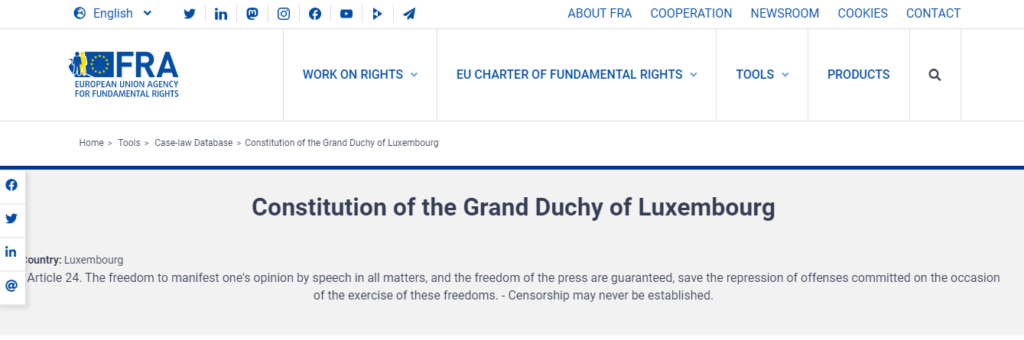
They do not obligate citizens to obey any foreign law other than local copyright law.
Further to that, the rising cost of living raises the cost of DMCA lawyer follow-up. So you have a slim chance of being charged.
8. Iceland
Iceland, which is located in the deep Atlantic Ocean, has strict privacy protection laws as well as press freedom. They also support net neutrality.
Furthermore, the Nordic island nation has one of the best optic fiber infrastructures for home and business internet.
Therefore, offshore dedicated server providers prefer the country for unbound operations, and ignoring DMCA.
It will be helpful to understand Iceland’s Protecting Intellectual Property Act; by the way, it is quite lenient for illegal downloading, distribution of films and TV shows, and purchasing counterfeit consumer goods.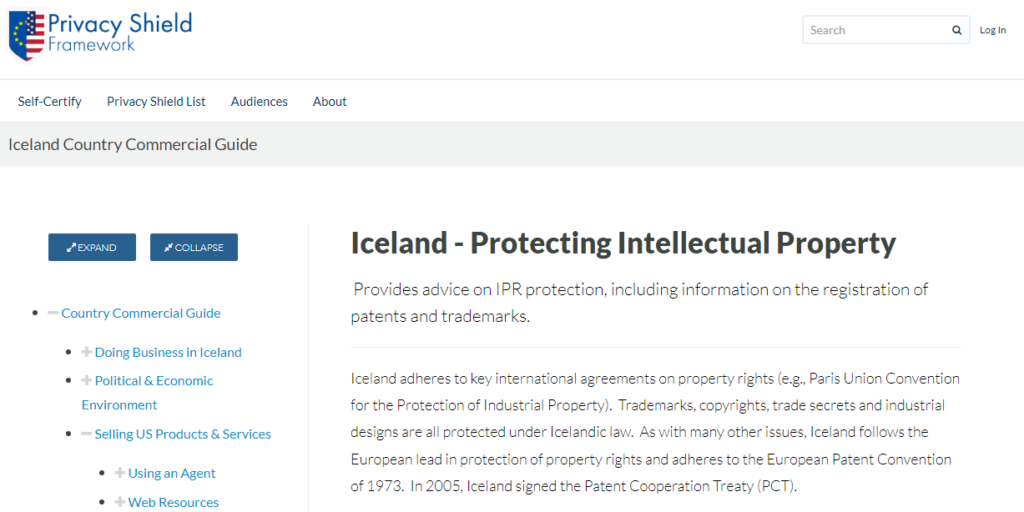
9. Switzerland
Switzerland, located in the heart of Europe, has one of the most stringent data and privacy protection laws (FADP) in the world.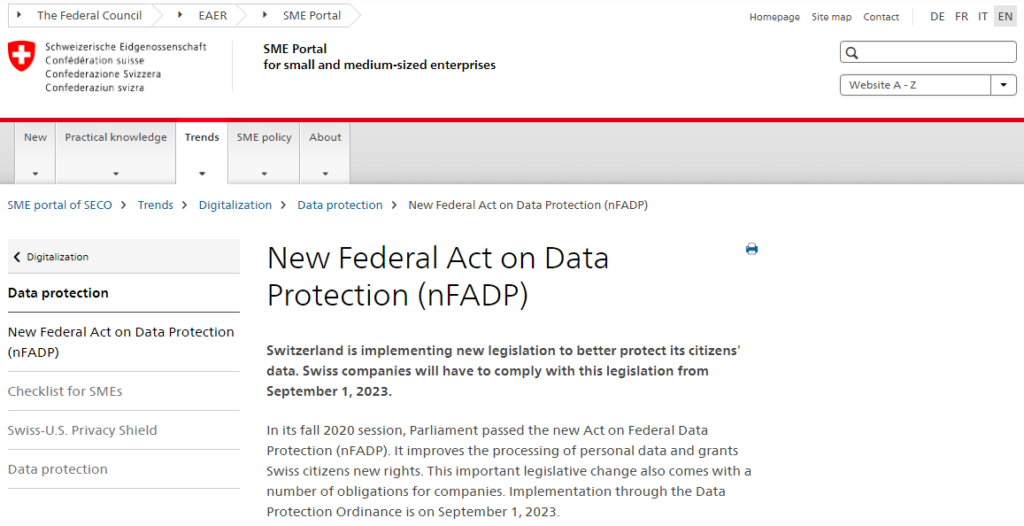
That is why popular leaders and businessmen from all over the world prefer to keep their funds in Swiss banks. So it is the global banking capital.
You can definitely go with a Swiss server if you want complete privacy. Because the mountainous country in central Europe restricts any monitoring of internet activity.
10. Romania
Many popular offshore hosts accept Romania. As the country in southeastern Europe adopted Article 30 of the Constitution in 1991 and amended it in 2003, which is dedicated to free expression.
Romanian privacy provisions are aligned with applicable EU law, which is well known for ensuring strict privacy.
Therefore, hosting DMCA-violated content can be a simple game here. Aside from that, Romanian copyright and neighboring rights protect copyright holders’ properties throughout the country. 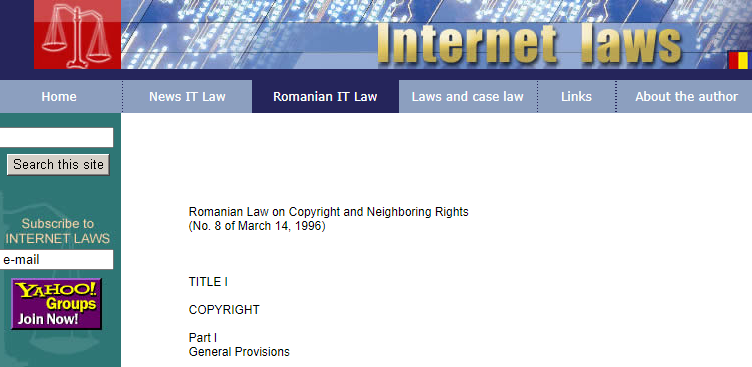 So, you must adhere to it.
FAQ
1. What does it mean when a country is considered DMCA ignored?
A DMCA ignored country is one that does not enforce the U.S. Digital Millennium Copyright Act. These nations either reject U.S. jurisdiction, follow their own copyright standards, or prioritize privacy over international copyright complaints. Hosting in these countries may help protect content from DMCA takedown notices, but each location still has its own rules and risks to understand.
2. Is it completely safe to host copyrighted material in an offshore country?
Not entirely. While DMCA ignored countries may not follow U.S. copyright law, they still enforce their own local copyright regulations. Some countries allow freedom of expression but restrict political content. Others have corruption risks or government monitoring. You should always review local laws, the host’s own policies, and choose providers that clearly state their approach to DMCA complaints.
3. Why do most domain extensions still fall under DMCA rules?
Most popular domain extensions—such as .com, .net, .org, and .info—are operated by companies registered in the United States. This means they must comply with DMCA requests even if your hosting server is located offshore. If you want to avoid this, you may use country specific domains like .ru, .ch, .my, or .is, which do not fall under U.S. jurisdiction.
4. Which countries are commonly used for DMCA ignored hosting and why?
Several countries are known for lenient or independent copyright laws. Examples include Russia, Romania, Iceland, Switzerland, Malaysia, and the Netherlands. These countries prioritize privacy, data freedom, or have minimal cooperation with U.S. copyright law. However, each has unique limits—for example, Russia may restrict political content, and Bulgaria may have corruption risks—so selecting the right host and understanding the local environment is essential.

Ravi Kumar is a Server Performance Analyst with over 4 years of experience benchmarking cloud infrastructure. He has optimized and stress-tested over 150+ websites, digging deep into uptime, disk latency, and CPU performance. Whether you’re looking for a free trial or a high-performance production server, Ravi uses real-world data to help you find the perfect host.
hahaha romania really? guess it’s time to move my ‘totally legal’ movie collection there lol. wonder if Dracula’s got a good wifi setup.
I think Iceland should be higher up. They’ve got crazy good internet and are all about freedom of information. Plus, their stance on digital privacy is top-notch. Why’s Switzerland ahead when Iceland offers so much more for digital freedoms?
Interesting point, Kendall B. The ranking isn’t necessarily about the level of digital freedom but more on how each place deals with copyright materials specifically. Iceland’s definitely a leader in digital privacy, but Switzerland has some unique laws favoring data protection and copyright balance that edged it ahead in this context.
yo, so when talking bout Malaysia for hosting, do they got like, special rules for music? as an upcoming artist, tryna figure where to share my stuff without big labels breathing down my neck ya know lol. any advice?
Luxembourg’s on this list, huh? I’ve heard they have solid privacy laws, but what’s the real deal with copyrights there? Seems too good to be true for it to be a safe haven for copyrighted materials.
so, i was reading about hosting stuff in singapore and got thinking, how does the law work there for like digital content? singapore seems strict but also tech-forward, idk… is it like a loophole for copyright stuff, or are they super on it? curious coz it sounds like a tech paradise but also a bit of a legal maze lol. anyone got insights?
Hey Chrissy T., actually singapore’s pretty up and down about it. they respect copyright but also love their tech. it’s all about not crossing lines but yeah, it’s complicated. lots of startups there though, making it work!